
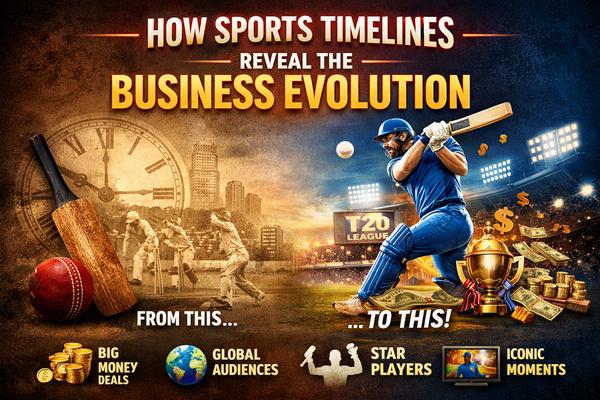
How Sports Timelines Reveal the Business Evolution?
You ever sit back during a tense chase and realize cricket doesn’t just entertain you it sells you something every minute? Jerseys flash sponsors, commentators plug brands mid-sentence, and even replays carry logos. That didn’t just “happen.” A long, fascinating timeline built this business machine, layer by layer.
In this article How Sports Timelines Reveal the Business Evolution we’ll track how cricket evolved from a slow-paced gentleman’s pastime into a multi-billion-dollar global industry. And along the way, we’ll revisit some unforgettable knocks that didn’t just win matches they boosted leagues, brands, and entire economies.
The Early Timeline: When Cricket Meant Prestige, Not Profit
Passion Over Paychecks
Cricket’s early days revolved around pride, not profit. Players represented regions, clubs, and countries with zero expectation of massive financial rewards. They played for honor, recognition, and the love of the game.
Organizers didn’t think like business owners. They arranged matches, not revenue streams. Nobody negotiated broadcasting rights or brand endorsements because those concepts didn’t exist yet.
Limited Financial Ecosystem
The early cricket economy looked incredibly simple:
- Ticket sales funded events
- Wealthy patrons supported teams
- Occasional local sponsorships added small revenue
That system worked because expectations stayed grounded. Nobody expected million-dollar deals or global fame.
Broadcasting Changed the Game Completely
Television Sparked the First Revolution
Television didn’t just broadcast cricket it transformed it. Once matches reached living rooms, audiences exploded. Suddenly, cricket moved from a stadium experience to a global spectacle.
Broadcasters saw massive potential. Companies rushed in to advertise. Cricket became valuable content instead of just a sport.
Numbers That Tell the Story
- The 1975 Cricket World Cup marked one of the earliest global broadcasting milestones
- By the 1992 World Cup, colored kits and day-night matches boosted viewership significantly
- Modern ICC events now reach over 1 billion global viewers cumulatively
That jump didn’t happen randomly. Business decisions drove every change.
Why This Moment Matters
Television introduced a key business principle: attention equals money. The more people watched, the more brands paid. Cricket started optimizing itself for viewership.
Format Evolution: Business Logic Disguised as Innovation
From Tests to T20
Test cricket demanded patience. Businesses needed speed. That mismatch led to innovation.
ODIs shortened the game. T20 cricket completely transformed it.
- Test match: 5 days
- ODI: ~8 hours
- T20: ~3 hours
That shift aligned perfectly with modern attention spans.
Why T20 Became a Goldmine
T20 cricket:
- Fits into busy schedules
- Maximizes ad slots
- Keeps viewers engaged throughout
Shorter matches mean higher retention. Higher retention means better ad revenue.
Franchise Leagues: Cricket Became an Industry
The IPL Effect
The launch of the Indian Premier League (IPL) in 2008 changed everything. It didn’t just introduce a league it introduced a business model.
Massive Financial Growth
- IPL media rights (2023–2027): approximately $6.2 billion
- Average IPL franchise valuation: $1 billion+ for top teams
- IPL brand value: over $10 billion
Those numbers prove one thing cricket turned into serious business.
What Made Leagues So Successful?
Leagues combined:
- Entertainment
- Star players
- City-based loyalty
- Aggressive marketing
Fans didn’t just watch they invested emotionally.
Memorable Knocks That Boosted Business Momentum
Some innings do more than win matches. They elevate leagues, attract sponsors, and bring new fans into the ecosystem.
Brendon McCullum’s 158 (2008 IPL Opener)
Right in the first IPL match, Brendon McCullum smashed 158 off 73 balls. That innings didn’t just dominate bowlers it announced IPL to the world.
Sponsors saw explosive potential. Fans saw entertainment. The league gained instant credibility.
MS Dhoni’s 91* (2011 World Cup Final)
When MS Dhoni finished with a six, India didn’t just win a World Cup. That moment became one of the most replayed clips in cricket history.
Brands capitalized immediately. Dhoni’s endorsement value skyrocketed. ICC events gained massive commercial traction.
Ben Stokes’ 84* (2019 World Cup Final)
Ben Stokes carried England through chaos in one of the greatest finals ever. That match shattered viewership records in the UK.
Broadcasters benefited massively. Cricket regained mainstream popularity in England.
Virat Kohli’s 82* vs Pakistan (T20 World Cup 2022)
Virat Kohli’s chase at Melbourne pulled in millions of viewers globally. Social media exploded within minutes.
That innings proved one thing: star power drives engagement, and engagement drives revenue.
Why These Knocks Matter for Business
These innings:
- Increase viewership spikes
- Boost sponsorship visibility
- Strengthen league branding
Cricket doesn’t just need good matches it needs iconic moments.
Player Branding: Cricketers Became Global Assets
The Rise of Personal Brands
Modern cricketers operate like businesses. They build personal brands alongside their cricket careers.
Players like:
- Virat Kohli
- MS Dhoni
- Joe Root
earn heavily through endorsements.
Revenue Streams Expanded
Players now earn from:
- Central contracts
- Franchise leagues
- Brand endorsements
- Social media partnerships
Top players earn millions annually, often exceeding match fees.
Social Media Changed Everything
A strong online presence increases a player’s value. Brands look at followers, engagement, and influence before signing deals.
Digital Streaming: Cricket Went Borderless
Mobile Viewing Took Over
Streaming platforms removed geographical barriers. Fans now watch matches anywhere, anytime.
Key Numbers
- Disney+ Hotstar recorded over 59 million concurrent viewers during IPL 2023
- Digital platforms contribute billions in revenue through ads and subscriptions
That scale didn’t exist a decade ago.
Why Streaming Matters
Streaming:
- Expands global reach
- Provides targeted advertising
- Tracks user behavior
Businesses love data, and streaming provides tons of it.
Sponsorship Evolution: From Logos to Storytelling
Old Model vs New Model
Earlier:
- Logo placement on jerseys
Now:
- Full campaigns
- Social media storytelling
- Player collaborations
Modern Brand Strategy
Brands now:
- Partner with players for long-term campaigns
- Create emotional narratives
- Engage fans directly
That shift creates deeper connections.
Data Analytics: Cricket Became Smarter
Numbers Drive Decisions
Teams rely on analytics for:
- Player selection
- Match strategy
- Opposition analysis
Business Impact
Data helps:
- Improve team performance
- Increase fan engagement
- Enhance broadcasting content
Even commentators now discuss strike rates and match-ups regularly.
Women’s Cricket: A Rapid Business Expansion
Growth in Numbers
- ICC Women’s T20 World Cup 2020 final attendance: 86,174 (record)
- Women’s Premier League (WPL) valuation: over $1 billion combined franchises
Why This Matters
Women’s cricket opens new markets. Sponsors see long-term growth potential.
Future Outlook
Investment will increase. Visibility will grow. The gap will continue shrinking.
Stadium Experience: Entertainment Beyond Cricket
Fans Expect More
Modern stadiums offer:
- Food courts
- Live music
- Fan zones
Technology Integration
You now see:
- Digital ticketing
- Giant HD screens
- Real-time stats
These features enhance fan satisfaction and justify premium pricing.
Statistics and Memorable Knocks Summary
Here’s a clear breakdown of cricket’s business evolution along with iconic performances:
| Category | Key Statistic / Moment | Impact |
|---|---|---|
| IPL Media Rights | $6.2 billion (2023–2027) | Massive revenue growth |
| IPL Brand Value | $10+ billion | Global league dominance |
| Streaming Record | 59 million concurrent viewers | Digital expansion |
| ICC Event Reach | 1+ billion viewers | Global audience |
| WPL Valuation | $1+ billion | Women’s cricket growth |
| McCullum 158 (2008) | Fastest IPL century (at the time) | League launch success |
| Dhoni 91* (2011 Final) | Match-winning knock | Brand explosion |
| Stokes 84* (2019 Final) | Historic chase | UK cricket revival |
| Kohli 82* (2022 T20 WC) | Iconic chase | Social media boom |
This table highlights how performance and business growth move together.
Comparing Eras: Tradition vs Commercial Power
Old Cricket
- Strong national identity
- Minimal commercialization
- Longer formats
Modern Cricket
- Global leagues
- Massive revenues
- Entertainment-focused formats
Honest Take
Traditional cricket built emotional depth. Modern cricket built financial strength. Both remain essential.
Fans: The Real Drivers of Evolution
Changing Behavior
Fans now prefer:
- Short formats
- Mobile viewing
- Interactive experiences
Social Media Influence
Fans shape:
- Player popularity
- Sponsorship deals
- League success
One viral moment can create massive business value.
Business Lessons from Cricket Timelines
Cricket’s journey teaches valuable lessons:
- Adapt quickly or lose relevance
- Diversify income streams
- Invest in fan experience
- Build strong personal and team brands
Every successful phase followed these principles.
Future Trends: What Comes Next?
Faster Formats
Expect even shorter formats designed for digital audiences.
AI Integration
Teams and broadcasters will rely heavily on AI for strategy and engagement.
Virtual Viewing
Fans may soon experience matches through virtual reality environments.
Women’s Cricket Expansion
This segment will attract massive investment and global attention.
Conclusion: The Game Behind the Game
Cricket started as a sport. It evolved into a global business powerhouse. Every stage in its timeline reflects smart decisions, changing audience behavior, and relentless innovation.
Memorable knocks didn’t just win matches they built brands, boosted leagues, and attracted billions in revenue. That’s the hidden story most fans miss.
So next time you watch a match, pay attention to more than the scoreboard. Notice the ads, the digital engagement, and the storytelling. That’s where the real business battle happens.
And honestly, isn’t that just as fascinating as a last-over thriller?